AI분석
Korea's Physical AI Push: How a Phrase Became a ₩3 Trillion National Bet, as Told at Physical AI Tech Day 2026
Officials, lawmakers and researchers at Physical AI Tech Day in Seoul explained how Korea turned physical AI into one of its three national mega projects in two years. NEXTMADE reports from the room.
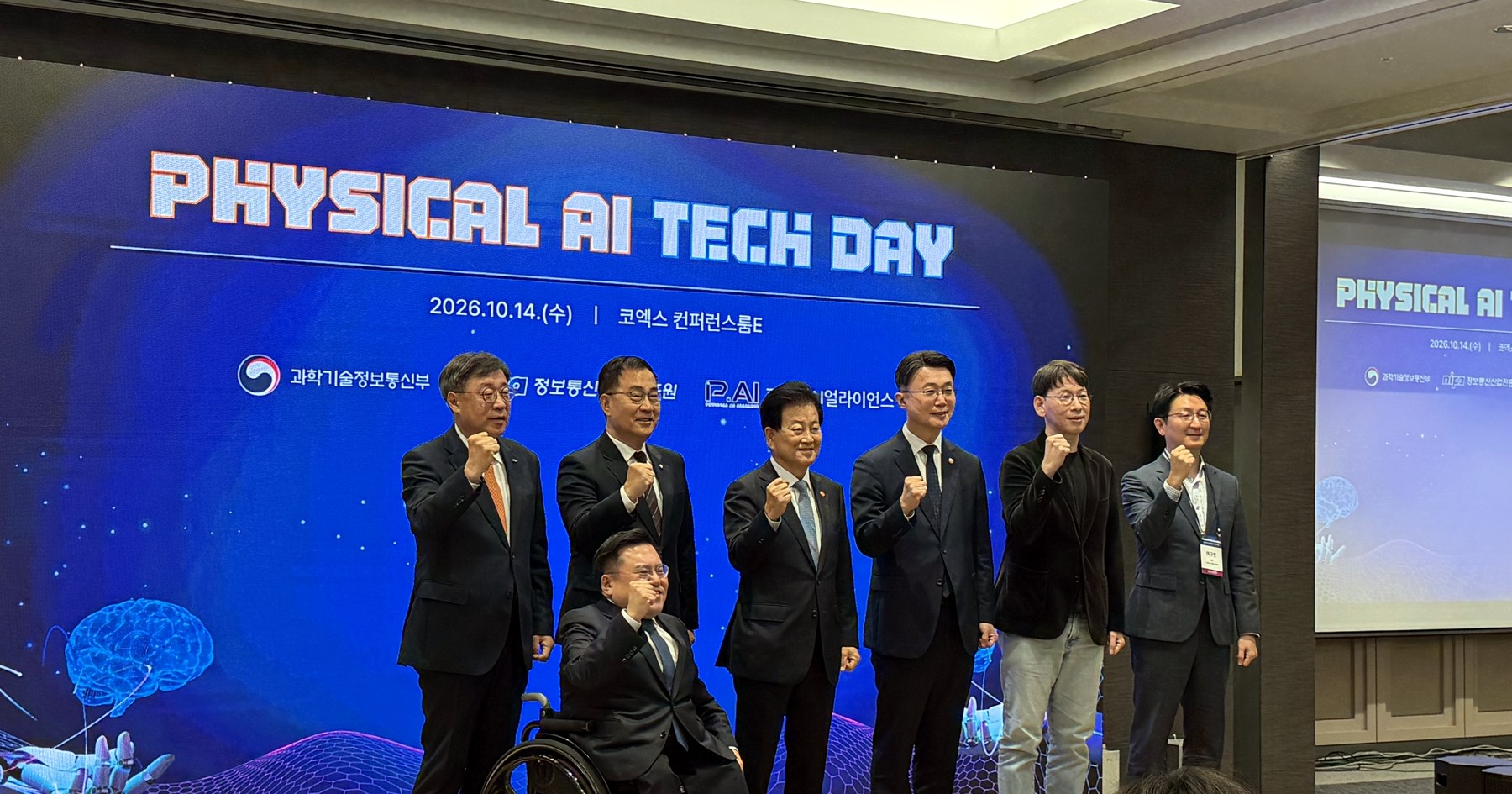
Korea is betting that physical AI, AI that perceives, decides and acts in the real world through robots and machines, is the race it can win after falling behind in large language models. At Physical AI Tech Day in Seoul on October 14, 2026, the officials and lawmakers who built that bet explained how it went from an unfamiliar phrase to a national mega project in about two years. NEXTMADE covered the event on site.
What is Physical AI Tech Week 2026?
Physical AI Tech Week ran October 13–14 at COEX in Seoul, hosted by the Ministry of Science and ICT, the National IT Industry Promotion Agency (NIPA) and the Physical AI Alliance under the slogan "Intelligence into Action." Day one featured special talks from Krafton's chief AI officer Kangwook Lee, NVIDIA Korea managing director Soyoung Jung and Intel vice president John V. Healy, plus a cross-ministry program briefing. Day two, Physical AI Tech Day, brought keynotes from FriendliAI CEO Byung-Gon Chun, MIT professor and Meta robotics architect Sangbae Kim, and GIST professor Kyoobin Lee, followed by two technical tracks on AI factories and precision manufacturing.
How did Korea's physical AI budget grow so fast?
According to Minister of Unification Chung Dong-young, who still sits on the National Assembly's science and ICT committee and spoke without notes, the timeline looks like this:
- June 2024 — NVIDIA's Jensen Huang declares at Computex that AI is moving to physical AI.
- From August 2024 — Chung and lawmaker Choi Hyung-doo convene a cross-party forum of startups, conglomerates, labs, universities and government that met every two weeks at 7 a.m. It became the Physical AI Strategy Forum.
- Late 2024 — Korea's AI Basic Act passes. A committee-approved plan for ₩1 trillion in GPU and physical AI funding collapses after the December martial-law crisis.
- July 2025 — The new government's first supplementary budget includes ₩42.6 billion for physical AI testbeds. Chung called it "the first time in the world" a national budget formally named physical AI.
- Next year (2027 budget) — Related funding grows to about ₩3.1 trillion, Chung said, and physical AI is now one of the government's three "mega projects" alongside semiconductors and AI data centers.
The figures above are Chung's statements on stage.
What did government leaders say?
Second Vice Minister of Science and ICT Ryu Je-myung opened the day by calling physical AI a core pillar of the mega-project agenda, with support running from basic research and data to field testing and commercialization. Departing from his script, he recalled that during the July 2025 budget debate many asked why Korea should fund an unfamiliar field "when we can barely keep up in LLMs," and thanked the two lawmakers who pushed it through.
People Power Party lawmaker Choi Hyung-doo framed the strategy bluntly: Korea may not lead in language models, but it can lead in physical AI, and falling behind is not an option. He tied it to Korea's manufacturing base, much of it outside the capital region, as a way for the whole country to grow together. NIPA president Park Yoon-kyu said the field has moved past proofs of concept to full execution, pointing to government programs in North Jeolla and South Gyeongsang that connect factories, robots, data and AI models.
Why does inference matter for robot brains?
FriendliAI CEO Byung-Gon Chun, whose research group pioneered the continuous batching technique now standard in LLM serving (introduced in the Orca paper at OSDI 2022), argued that general-purpose robots will need large "brains" running in the cloud, and that agents and robots share the same bottleneck: inference. Agent workloads reread very long contexts and produce short outputs, which makes KV-cache memory the critical resource. He noted that open models now sit on the cost-performance frontier in software-engineering benchmarks, then added: "Unfortunately, there is no Korean model there."
Why is robot manipulation harder than self-driving?
Sangbae Kim, the MIT professor behind the Cheetah robots and now a robotics architect at Meta, joined by video with a blunt message: "A robot with a 99% success rate is useless" on a factory floor. He contrasted self-driving data, about 15 billion miles, with manipulation datasets that have only just passed a million hours at leading companies, and doubted that hundreds of times more data would deliver the same reliability. Hands with around 20 joints, humanoids with 50 to 70, constant contact and ever-changing objects make manipulation far harder than driving, he said. Fine-tuning on teleoperation data costs generalization, so today's data paradigm cannot escape the trade-off between generalization and reliability.
His answer is structure: a force-and-touch reflex layer beneath vision-language-action models, and architectures that can be tested and debugged. "Safety and reliability cannot be given up," he said, adding that the race is not over until robots reach full reliability. His team showed language-commanded pick-and-place reaching 90–95% success with existing perception models and structured AI, without new data collection. He also noted that 35 physical AI startups have raised between $120 million and $2 billion each, most of them only one to two years old.
Read the full Korean coverage
- Opening and live coverage
- Minister Chung Dong-young: from a 7 a.m. forum to a national strategy
- Lawmaker Choi Hyung-doo on cross-party physical AI
- NIPA president Park Yoon-kyu
- FriendliAI CEO Byung-Gon Chun's keynote
- MIT professor Sangbae Kim's keynote
- Full Korean summary
NEXTMADE will add Kyoobin Lee's keynote on robot foundation models to this page.
출처
AI 기사 더 보기
EVENTAI · Events
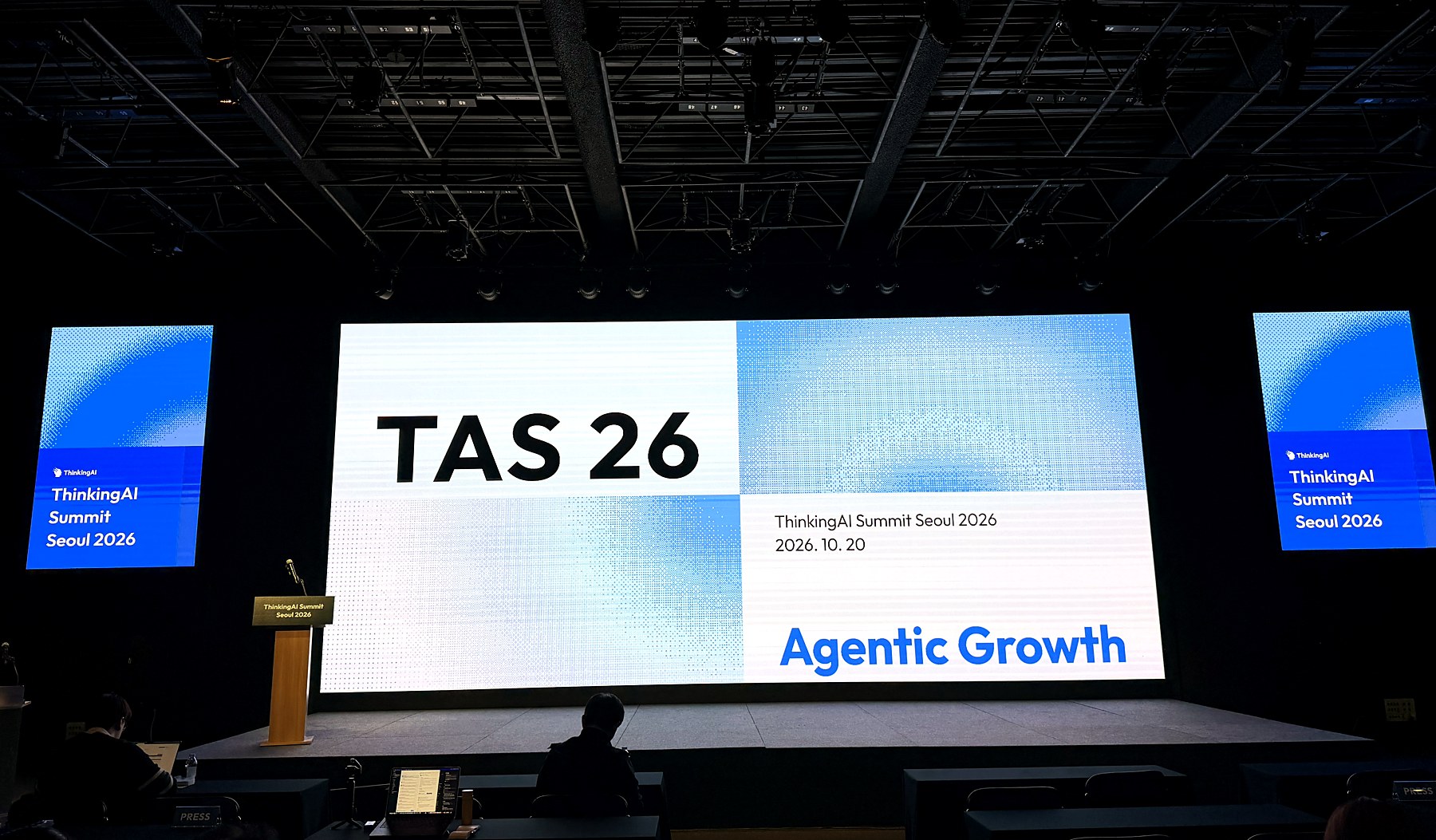
"여러분의 에이전트, 지금도 돌아가나요?"…씽킹AI 서밋 현장, 6명이 만든 대형 게임과 1인 증권 데이터 플랫폼
씽킹데이터에서 사명을 바꾼 씽킹AI가 4년째 서울 서밋을 열었다. 서광덕 한국 지사장, 서동진 넥스트증권 팀장, 강민석 언더독스 공동창업자가 AI의 속도를 실제 성장으로 바꾼 방법을 현장에서 숫자로 풀었다.
BRIEFAI · Products
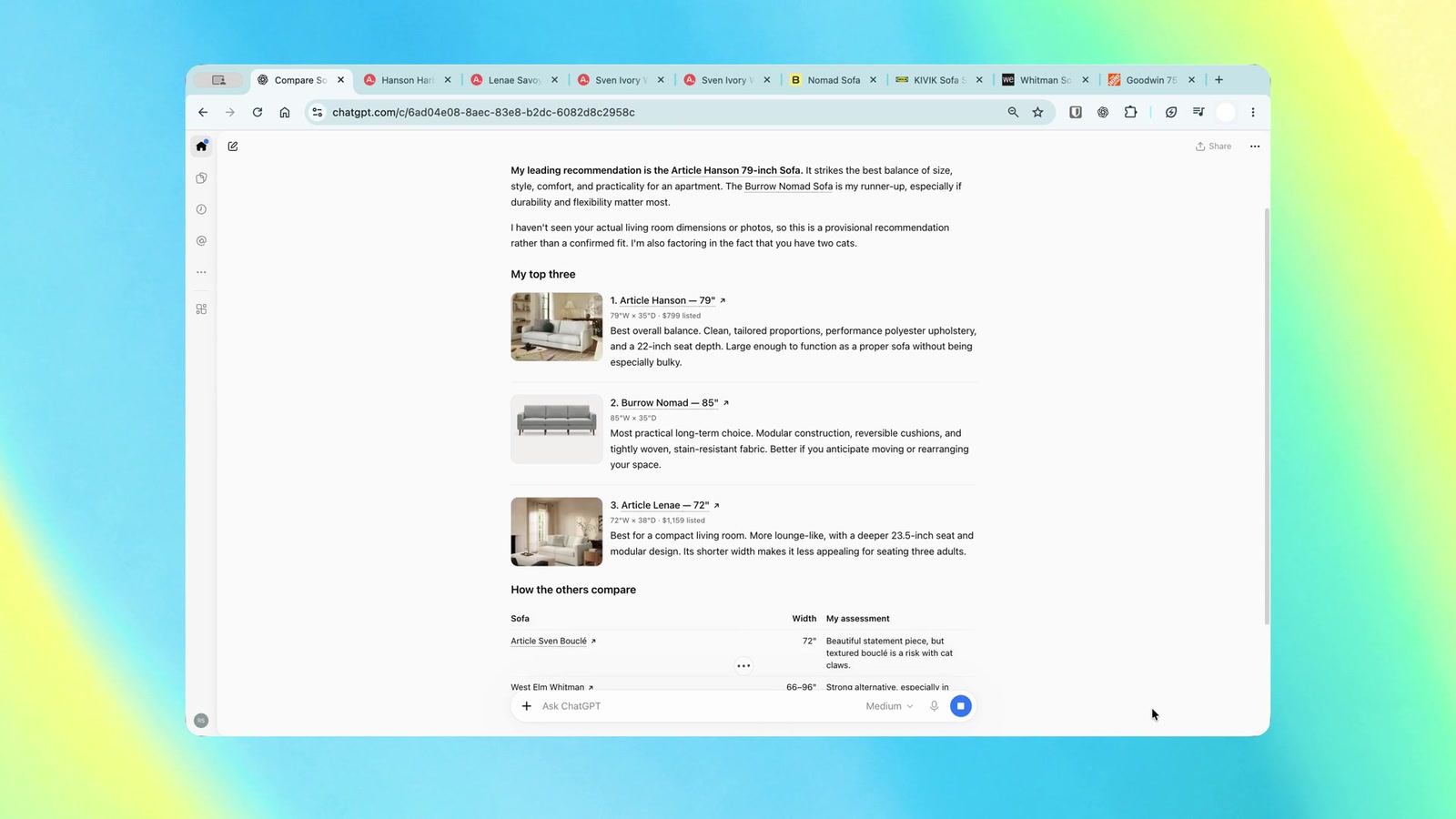
ChatGPT가 열어 둔 크롬 탭을 읽고 움직인다…기본은 '사이트마다 먼저 묻기'
ChatGPT가 크롬에 열린 탭을 훑어 답을 만들고, 작업 모드에서는 탭을 직접 조작한다. 쓰려면 데스크톱 앱과 브라우저 확장 프로그램이 필요하고, 사이트 허용 방식은 네 가지다.
BRIEFAI · Products
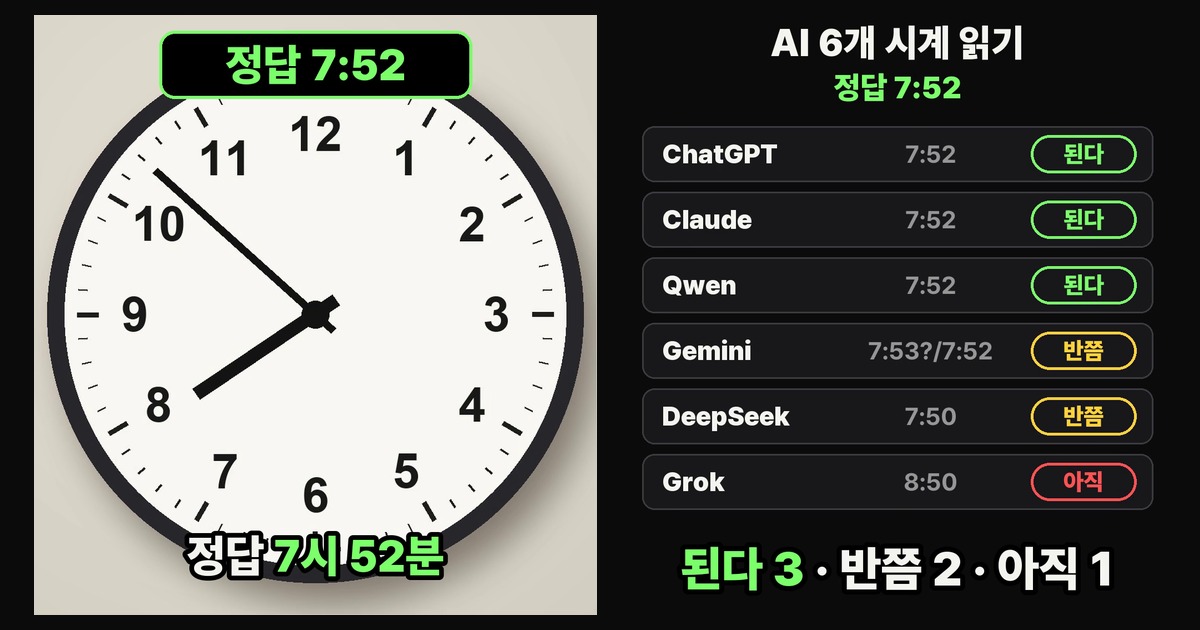
같은 시계 사진, AI 6개에 물었더니…정답 7시 52분 맞힌 건 3개
NEXTMADE가 ChatGPT·Gemini·Claude·Grok·DeepSeek·Qwen에 같은 아날로그 시계 사진을 보여 주고 몇 시 몇 분인지 물었다. 셋은 정확히 맞혔고 둘은 반쯤, Grok은 8시 50분이라고 답했다.